How to Create Bible Study Plans for Specific Life Struggles and Challenges
Passage is the Bible app that walks with you. Join Christians around the world growing in faith, one verse at a time.


The biggest mistake I see people make with Bible study is trying to use generic devotionals when they're wrestling with something specific like anxiety, grief, or relationship issues. I've watched friends abandon their faith journey because a one-size-fits-all approach felt irrelevant to their actual struggles. Here's what I've learned after years of creating targeted study plans: when you match Scripture directly to what you're facing, the Bible transforms from feeling like ancient history to becoming your most practical guidebook. Let me show you how to build these custom plans.

Match Your Scripture Selection to Your Season of Pain
How do I know which scriptures to focus on for my specific struggle?
I've learned the hard way that generic "feel good" verses don't cut it when you're in real pain. When I was dealing with job loss, Jeremiah 29:11 felt hollow, but Ecclesiastes 3:1-8 about seasons actually helped me process the waiting.
Start by identifying your core emotion - are you angry, scared, grieving, or just numb? Angry people need Psalms 13 and 22 more than Romans 8:28. If you're wrestling with doubt, go straight to the book of Job instead of avoiding it. I always match my scripture to where I actually am, not where I think I should be. Your Bible study should meet you in your mess, not pretend it doesn't exist.

Building Your Study Around Questions That Keep You Up at Night
I've learned to sort my late-night wrestling matches into four categories that actually help me study better:
| Personal/Internal | Relational/External |
|---|---|
| Immediate Crisis | "Why is this happening to me right now?" (Job, Psalms of lament) |
| Ongoing Pattern | "Why do I keep making the same mistakes?" (Romans 7, Galatians 5) |
The top row demands urgent, practical answers. The bottom row needs deeper, systematic study. I tackle immediate crises with shorter, more frequent sessions. Ongoing patterns get longer, more methodical approaches.
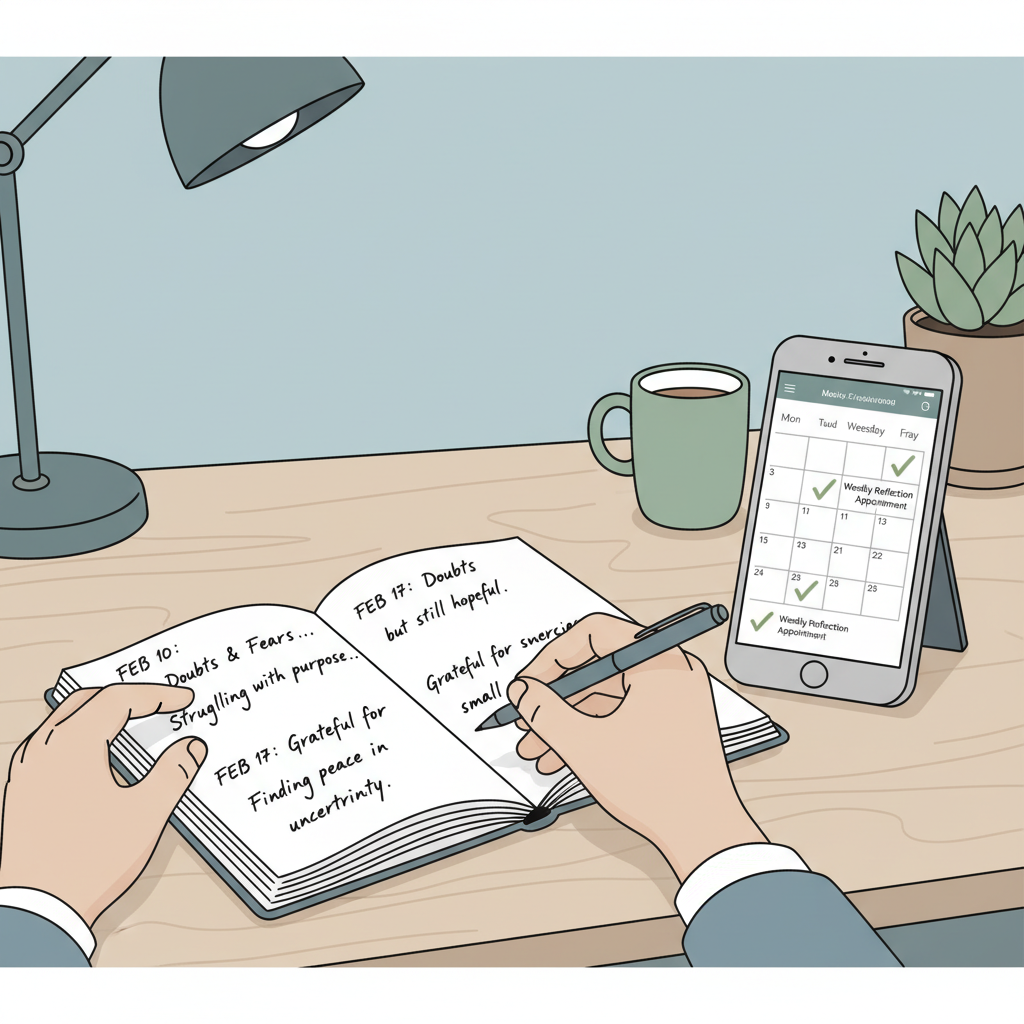
Creating Weekly Check-ins That Actually Change Your Heart
• Pick one specific question that cuts deep - I ask myself "Where did I choose fear over faith this week?" instead of vague stuff like "How's my spiritual life?"
• Write it down, even if it's ugly - Typing on my phone doesn't count. Something about pen on paper makes me more honest about my actual struggles
• Set a recurring reminder for the same day/time - Mine's Sunday at 8pm with coffee. Consistency beats intensity every time
• Focus on patterns, not perfection - I look for themes across weeks rather than beating myself up over individual failures
• Connect your struggle to what you studied - If I'm working through anxiety passages, I specifically ask "When did I actually apply what I read about casting cares on God?"
• End with one concrete next step - Not three goals, just one thing I'll do differently this week

When Bible Verses Feel Empty: Switching from Reading to Wrestling
I learned the hard way that highlighting verses about peace while your marriage is falling apart feels hollow. The breakthrough came when I stopped trying to find comfort and started arguing with the text instead.
Take Job 13:15 - "Though he slay me, yet will I trust in him." Instead of nodding along, I wrote in my margins: "Really? Because I'm pretty angry right now." That honest response opened up three pages of wrestling with what trust actually looks like when everything's broken.
I've found that God can handle our frustration better than our fake politeness. Write your real questions. Push back on passages that don't make sense. The wrestling match is where the real conversation begins.
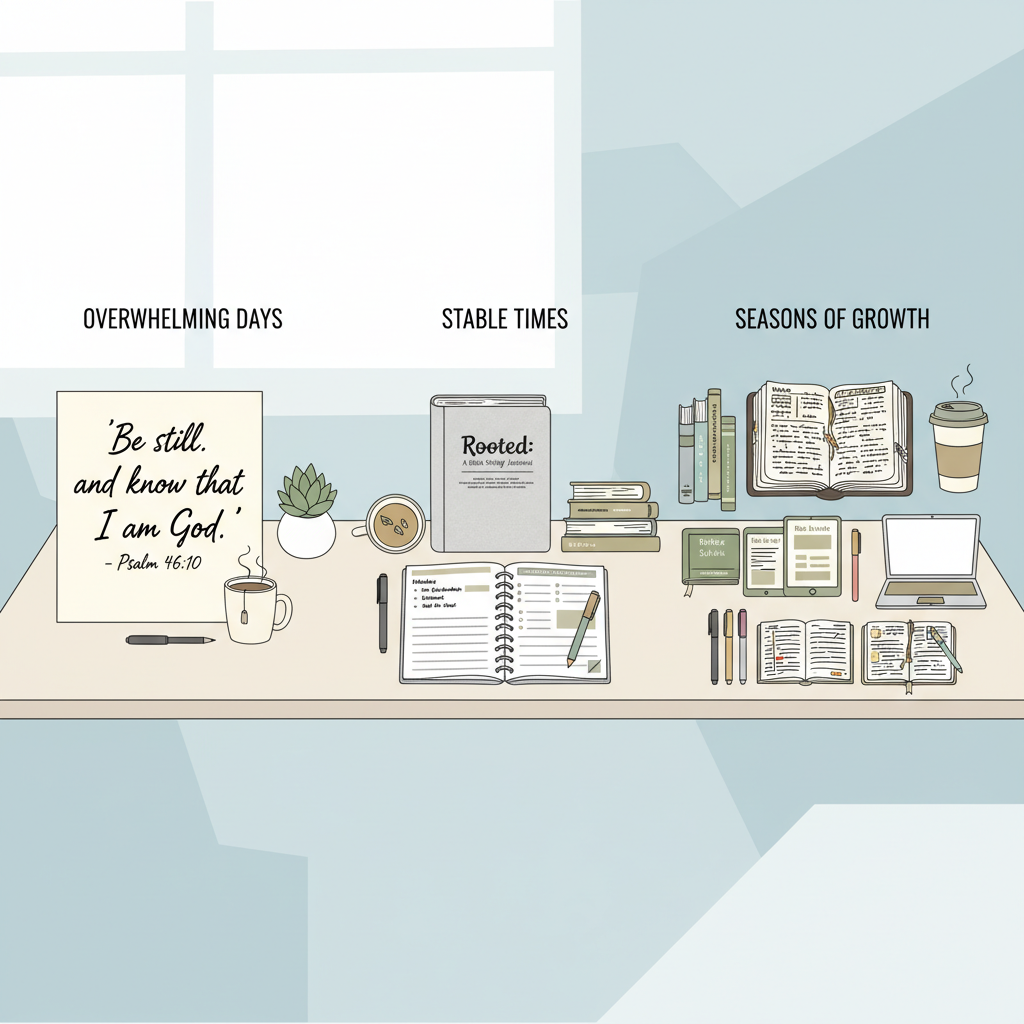
Tailoring Study Length to Match Your Emotional Bandwidth
Step 1: Start ridiculously short during crisis periods. When I was dealing with job loss, I could barely manage five minutes. Don't fight it—use single verses or one paragraph devotionals. I'd literally set a timer for three minutes some days.
Step 2: Scale up gradually as you stabilize. Once the immediate crisis passes, bump to 10-15 minutes. I've learned that jumping from five minutes to an hour just leads to guilt and abandonment.
Step 3: Build in flex days. I always plan shorter "emergency" studies for when life implodes again—because it will.
What People Ask
How do I find the right Bible verses when I'm dealing with anxiety and don't know where to start?
I always tell people to start with Philippians 4:6-7 and Matthew 6:25-34 - these hit anxiety head-on and give you something concrete to work with. From there, I'd search for keywords like "fear," "worry," and "peace" in a Bible app, then pick 3-4 verses that actually speak to your specific situation rather than trying to tackle everything at once.
Should I create different study plans for my small group versus what I'm working through personally with depression?
Absolutely - what I share in my small group is maybe 30% of what I'm actually wrestling with, and that's totally fine. I keep a private study journal where I can be brutally honest about the dark stuff, then I'll share the breakthrough moments or practical verses that might help others without exposing my deepest struggles.
How long should I stick with one topic before moving on to something else in my Bible study?
From what I've seen, most people give up too early - I'd say stick with one struggle for at least 3-4 weeks, even if it feels repetitive. When I was dealing with forgiveness issues, it took me almost two months of hitting the same verses before something finally clicked, and rushing to the next topic would've robbed me of that breakthrough.
The One Thing That Actually Matters
Here's what I'd do differently if I started over: pick one verse and sit with it for a week instead of rushing through chapters. The Bible isn't a self-help book you speed through—it's meant to marinate in your mess.